Our three kids spent three weeks in a local Japanese preschool in Toyama while Morgan and I worked from the same small town. What the program is, what the town is actually like, and what I would do differently.
We just got back from a month in Japan.
Three weeks of that was the actual reason we went: our kids attended a Japanese preschool every day while Morgan and I lived in the same small town, worked, and figured out the rest as we went.
Tokyo was on the front end of the trip, Kyoto on the back end.
The program
Morgan got served an ad on Instagram. It's called Japan Preschool Exchange, and it's a real company that places your kids into a Japanese preschool for a set stretch of time. One week, two weeks, three weeks, longer if you want it. There are schools all over Japan, and they've started opening locations in Spain and Costa Rica.
The origin of it is the part I found interesting. It began as a program for Japanese families to get out of the cities and see other parts of their own country. Then Australians started signing up, along with people from Singapore and Taiwan, and eventually it opened up to everyone.
The mechanics are simple. You sign up, pick how long you're staying, and choose your city. They arrange your accommodation, help you get a rental car, and place your kids in the school. You show up, and the logistics are already handled.
Why Toyama
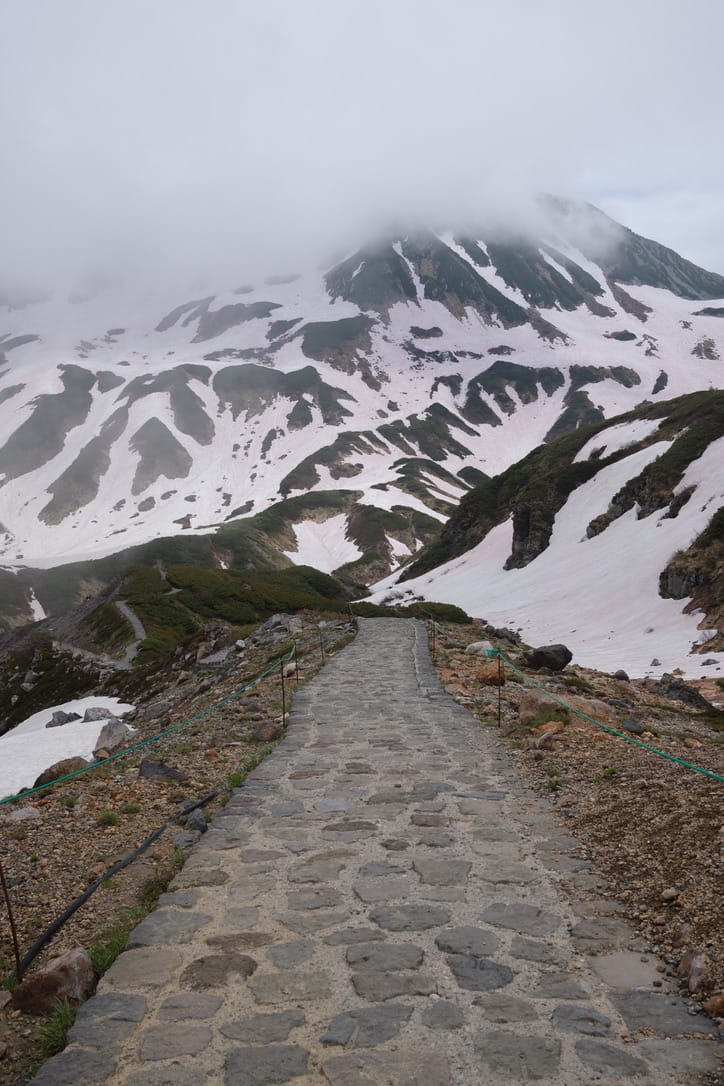
Toyama sits in the middle-north of Japan, in the region people call the Japanese Alps. Nagano, Matsumoto and Toyama are the gateway cities for it, so what you picture going in is a ski town. Toyama city itself is a port on Toyama Bay. Both of those things are true at once, and the gap between them turned out to be a good part of this story.
We go to Japan a lot, but we mostly stay inside the Tokyo, Kyoto and Osaka triangle and only branch out a little from there. Everybody tells you that you have to try rural Japan. So that was the assignment for this trip.
Toyama also sits in a good spot for jumping city to city, which mattered because our weekends were free. Kanazawa is right there. Fukui is close, and it has a dinosaur museum. Matsumoto sits at high elevation on the way in from Tokyo.
Getting there
Our flight was at 6:30 in the morning, so we were up at 3am. The kids did pretty well, honestly.
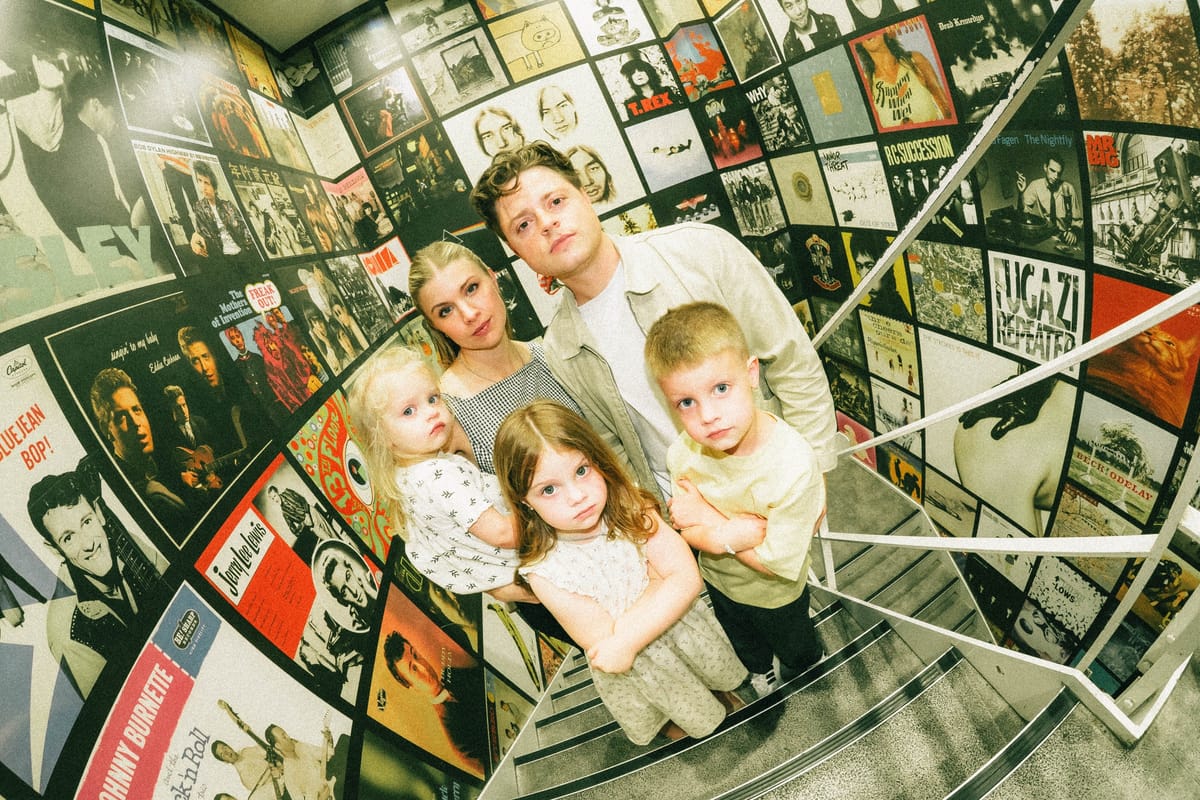
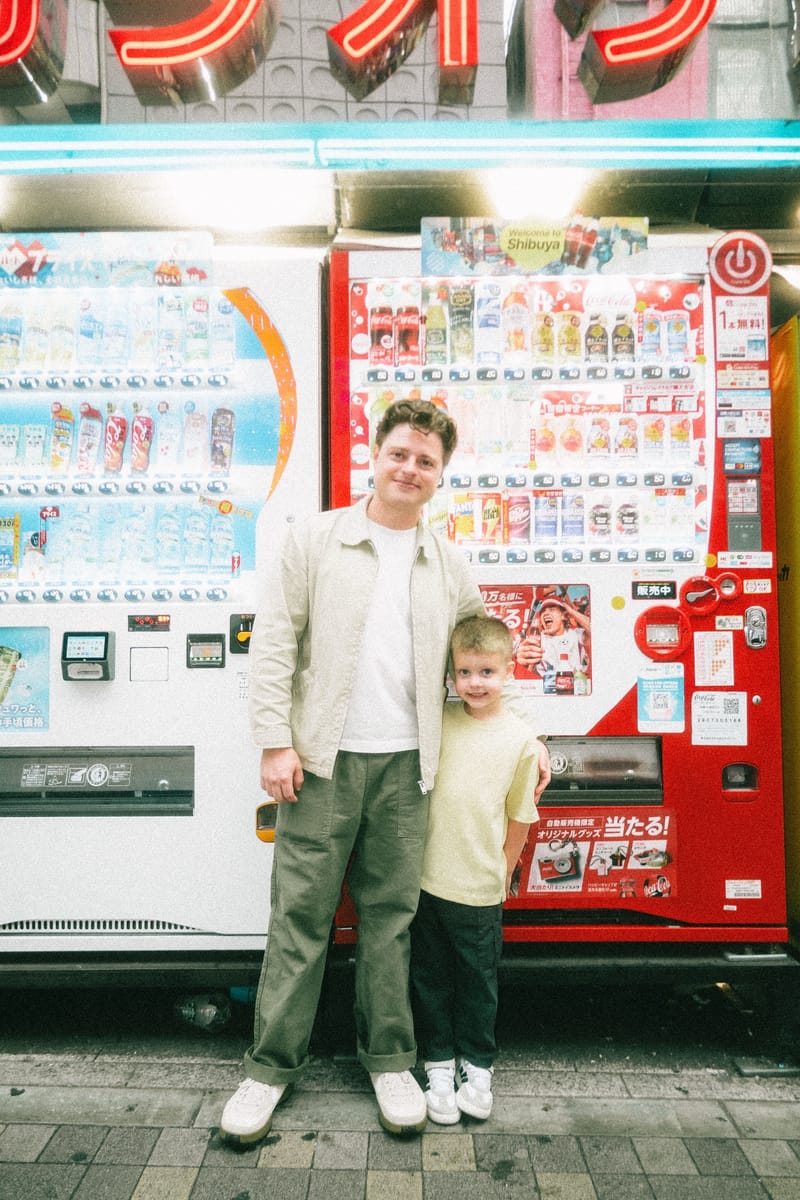
We landed in Tokyo and spent two days there. Morgan's parents came along for the first week, before the school program started, so we showed them the highlights. We also did a photo shoot in the middle of the busiest part of Tokyo with a photographer called Obake Rock, @obakerock on Instagram. I had to book him eight months out. Completely worth it.
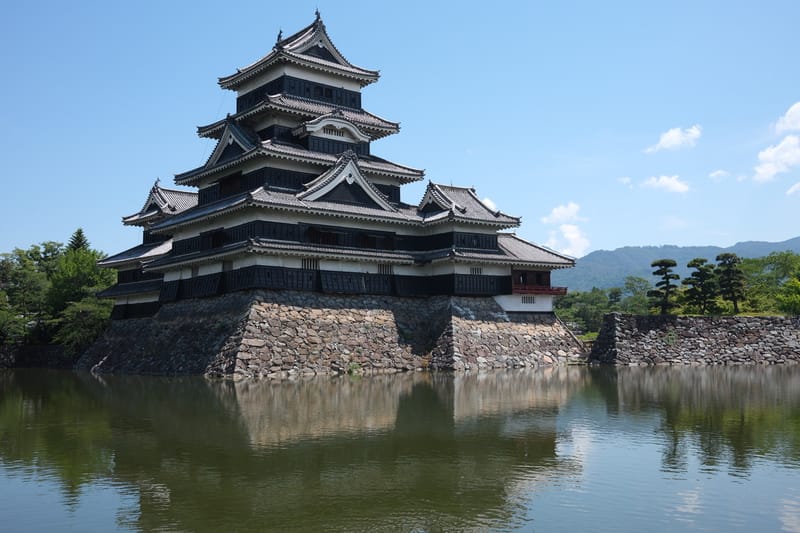
Then we trained up to Matsumoto. Small town, high up, so the weather was beautiful. It grew on us. Probably worth a day trip if you're passing through. We ate at a classic izakaya and it was one of the most fun nights of the trip. What you notice in towns this size is how little they're catered to tourists. In the big cities, people are used to visitors and they accommodate you. Not many people head up to where we were going.
Two days later we stopped in Nagano on the way to Toyama. Nagano hosted the Winter Olympics, and the city still has spots and leftovers from it scattered around, which I thought was funny. Not many people go. It reminds me of Chicago and New York. Chicago is perfectly fine, and most people still just go to New York. Nagano is Tokyo light.
Then we got to Toyama and picked up the rental car. It was huge. Huge for Japan, which meant they were laughing at us at the counter. You can tell they're just not used to big families. Driving on the opposite side of the road didn't bother me, since I lived in Australia for a year and have driven cars like that for a while. It does take some getting used to.
The town
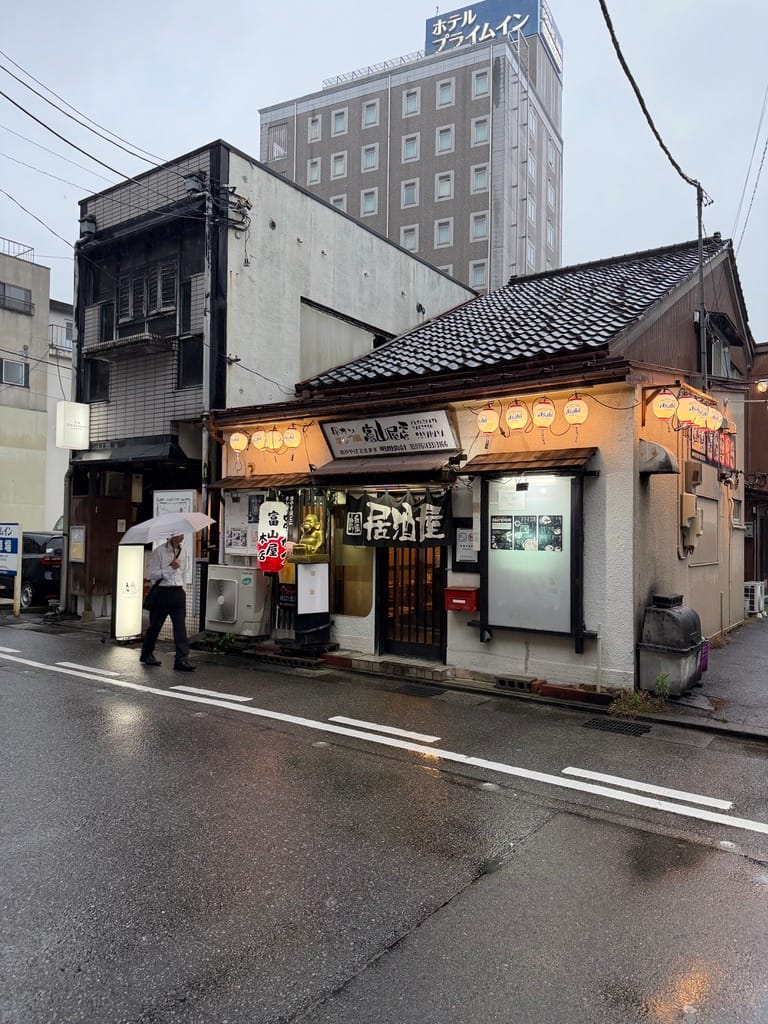
I'll be honest about this part. Toyama is an industrial town. A fishing port, and that's the reality of it. It's a nice place, but when you're comparing it to Kyoto or Tokyo, there is just a lot more to do in those cities. When we pulled in, we were kind of like, oh man, what town did we choose to spend three weeks in?
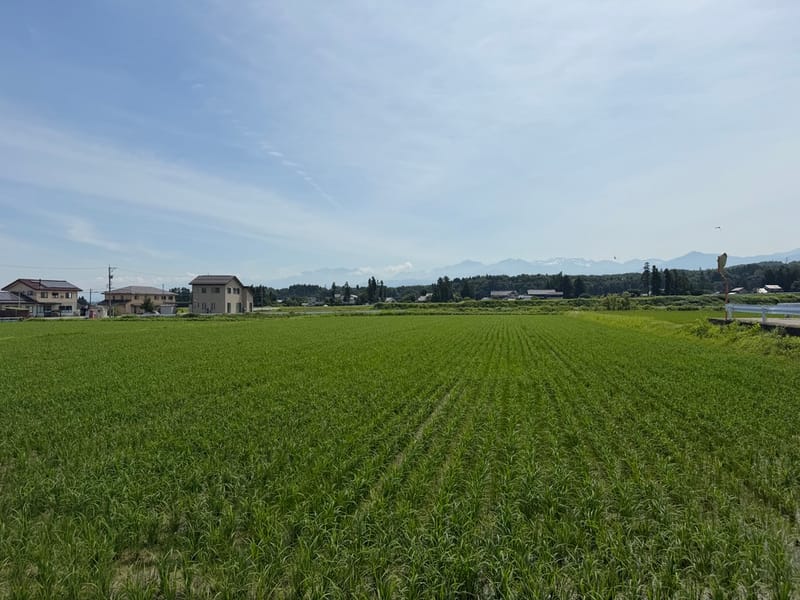
And we weren't even in Toyama. We were 30 minutes south of it, closer to the mountains, out where a lot of the rice is grown. That part is genuinely beautiful. It's also empty. The nearest station was a 30-minute drive, so if anybody wanted to take a train, that was a drive first. There was nothing to do in the immediate area, and scenery only carries you so far before you've seen it.
The photos that sell you on Toyama deserve a warning. We recognized one of them later, and it turned out to be a single pretty street about an hour outside the city. We drove through it on our way to Gokayama, which is a UNESCO World Heritage site up in the mountains. Thatched roofs, fully preserved, and people still live there. That drive was an hour and a half each way and I'd do it again. It just isn't Toyama.
The school
The school was the best part of the trip, and it isn't close. They call it Japanese Montessori. In practice, the teaching is aimed at life skills and how to respect other people. Traditional school subjects barely came into it.
Japan is known for being clean, safe and low crime, and kids wander around on their own because there's a cultural understanding that keeping children safe is a collective responsibility. You'll see five-year-olds riding the subway by themselves. Watching a school day, you realize where that comes from. It's taught early, and it's a heavy emphasis.
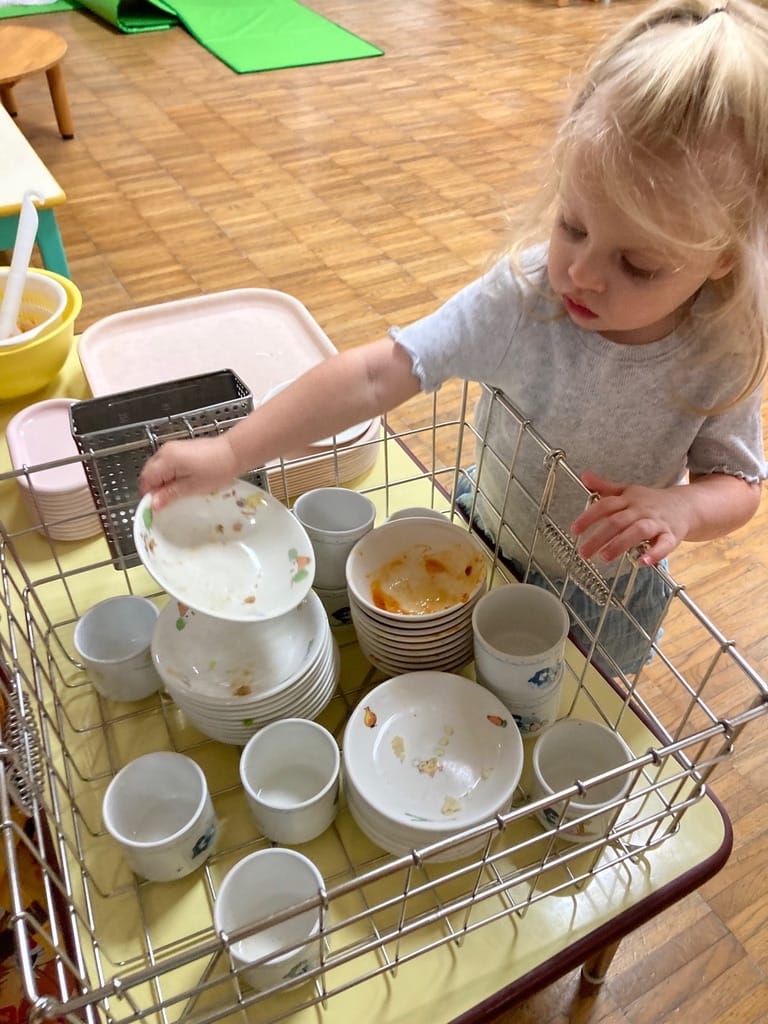
They had my two-year-old going through a buffet line at lunch every day, making her own plate. When she finished, she cleaned it and put it in the dishwasher. My kid has never done that in her life.
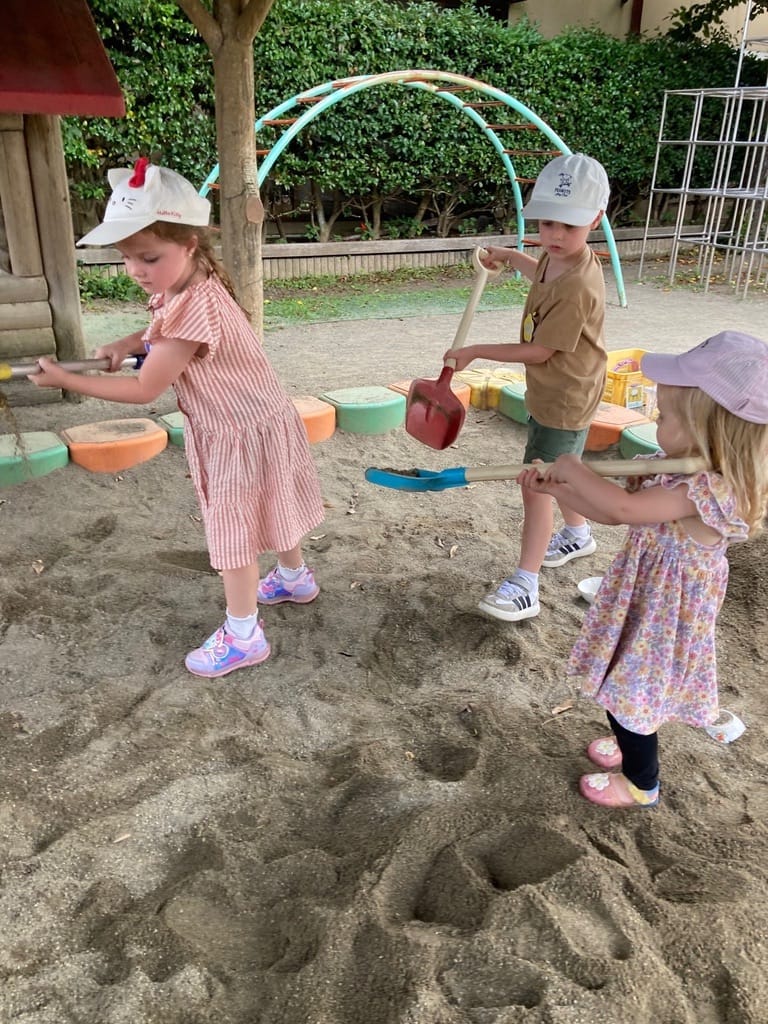
The rest of it was playing and activities. They ran field trips where the class would take a train somewhere and spend the day at a park. Our kids had a blast.
The first week, there were no other international families. The second week a family from Dallas showed up and turned out to be staying right down the hall from us, with a daughter my daughter's age. The week after that, another American family arrived. Taiwan and Singapore seem to be the countries that use a program like this the most.
The school part I'd rate a 9 out of 10.
Some days Morgan and I just worked and treated the whole thing as a work trip. The hard part there was the 14-hour time difference. Lining up with people back home meant taking calls at 7am or 11pm.
Weekends
The first weekend we went to Kanazawa, the town they call Little Kyoto. Honestly, it's really pretty. It was spared from the World War II bombings because the military apparently didn't consider it a place worth hitting, so it's very preserved. The restaurants are great. We did a food tour, plus a lot of long lunches.
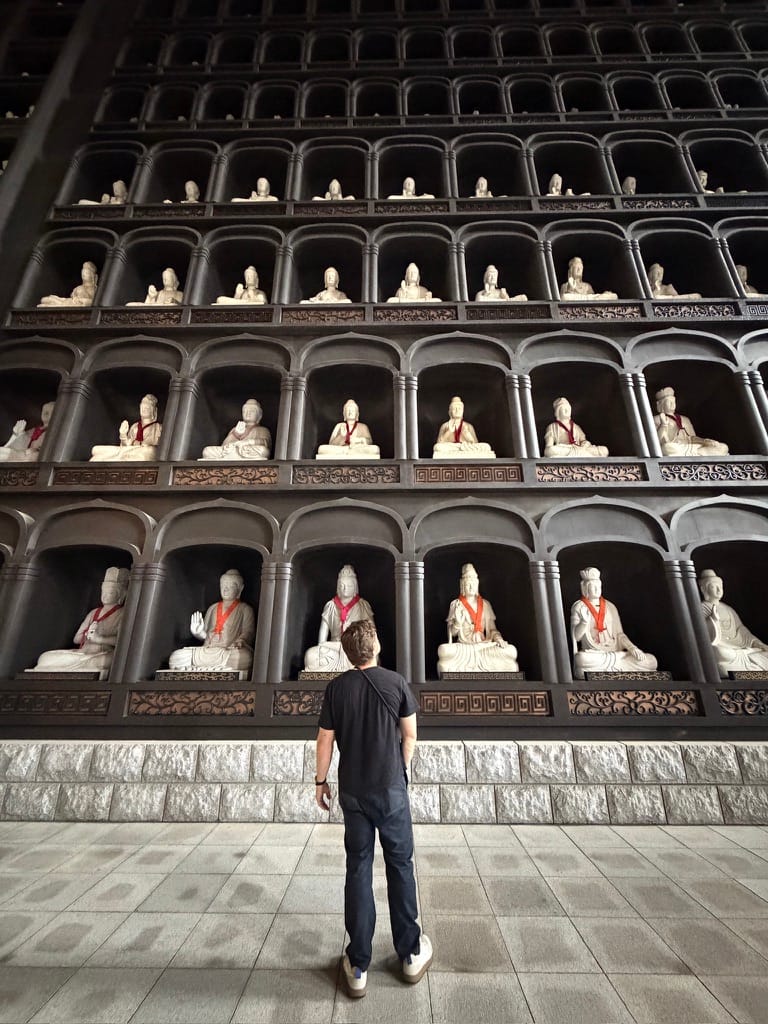
The next weekend we went to Fukui for the Fukui Dinosaur Museum. You get there on something called the Dinosaur Train, which is themed all the way through, dinosaurs inside the cars, the full experience. The kids loved it. The museum is in Katsuyama, which is also home to the Echizen Daibutsu. That was one of the coolest things I have ever seen. Pictures don't do it justice. There are statues lined along the walls, and the scale of them is absolutely massive. Very long Saturday. Worth it.
The next day we kept it easy and went to Himi, a fishing village close to Toyama. We rode a romance train, one of those little themed trains that runs along the coastline. We ran into a couple from Hawaii with kids and ours played together for a while.
The last week
My youngest got hand, foot and mouth. Nobody else caught it, thankfully, but she missed the last week of school except for Monday and hung out with us instead. The school had already told us they'd had an outbreak and were being careful, so I know where she got it.
I'm still asking them what the policy is. It isn't their fault and I'm not blaming anybody. I paid for that week and she didn't go. What happens if that lands in your first week and everyone catches it? Two weeks gone. That's the kind of thing you don't think about going in.
Between the illness and being pretty over Toyama by then, we pivoted. On Friday we pulled the kids out of school early and trained over to Kyoto for the rest of the trip. Two days there. We did teamLab Biovortex, stayed in an old machiya, and did some other Kyoto things.
We flew home Sunday on a night flight, so the kids slept the entire way. We got delayed a little, rolled in at 1:30 in the morning, bathed everybody, and fell asleep around 3 or 4am. Then, as a family, we slept until 3pm the next day. Even the kids didn't wake up.
Living there
Living somewhere is a lot different from vacationing there. You have to do everything for yourself, and this was not a vacation. I worked the whole time, and the days settled into a rhythm close to the one we have at home: drop the kids at school at nine, work, pick them up at four. Japan gets looked at a certain way, and some of it is harder than people expect and some of it is easier. It made me thankful, or at least gave me a different perspective on some of the things I take for granted here in the US.
The kids loved it, and that was the whole thing. If the kids weren't loving it, this would have felt like a completely different trip.
Running the businesses from Japan
The reason we could leave at all is that we spent a long time building our businesses to work without us standing in the middle of everything.
The fourteen hour time difference put our day squarely in their night and made staying in sync genuinely hard. Europe would be easier just from the overlap. What saved it is that our team is remote-first and spread across time zones already, so somebody was always awake. That's not luck. It's how we built it, and it's the same thing we do for other companies through RemoTeams, which is my company.
What I'd change
Really research the town you're staying in. That's the big one. They pushed us toward Toyama and we were down for it, so don't get me wrong, we could have chosen something else. What made it difficult is that they had a hard time telling us where we were actually going to be living. Think about what your every day is going to look like there, because I think we envisioned the being-there part a little differently than it turned out.
Once you've paid, you're locked in. They have your money and you can't really pivot. Japan makes it easy to bounce around and see other parts of the country, so we made it work, but I remember thinking, oh shoot, we are really locked in here.
It's also expensive for what it is. We locked in a rate below what I'm seeing now. They raised money last year and prices have gone up a lot since, so I expect they'll juice it a little further.
If I did the school part again, I'd want to choose our own accommodation. Ours was fine. Not great by any means, and small, though everything in Japan is small. I'd be curious how much of the price is the accommodation and whether they'd let you pull that piece out. I do wonder if there's a version of this you could put together yourself.
Then there's the format. A lot of the families we talked to won't do three weeks in one spot. They'll do a week at a school in Tokyo, then a week at another school somewhere else. My first thought was that it sounded like a lot of moving around. Then I thought about it more. It's all trains, so it's easy, and you're not flying everywhere. So unless you absolutely know you love a spot, that's what I'd tell you to do: move around, stay in different parts of Japan. That's also the version where having someone else handle the logistics earns its keep.
What you actually miss
One last thing, and it might be the most useful part. You build a month away up in your head as this huge disruptive thing. Then you get home, you catch up with everyone, and it was life as normal for them. Not much had happened. You miss less than you think.
Nothing was on fire. That one realization is what makes the next trip feel possible.
What's next
We're homeschooling this fall so we can commit to this properly. I think trips run somewhere between three weeks and three months. We're still figuring out what works.
We do still have businesses that need us. We're opening Domo, a mindful cafe in Houston, and a new cafe is not a leave-it-alone situation. But I feel good about the systems and the people we've put in place.
The key is building systems and teams that don't require you to be in the middle of everything. That takes years, but it's what makes extended travel possible. If you're thinking about doing something like this, start building toward it now.
I'll be writing about how we're actually doing it as we go.